 Temperament
Piano Tuning & Technical Service
Every Piano Deserves to Sound Like Itself.
Serving the Greater Boston area and Southern New Hampshire.
Registered Piano Technician · Thirty years of field service
30+
Years Experience
2,400+
Instruments Serviced
A440
Precision Standard
The Work
Five services. One technician. No subcontracting.

Pitch Correction
Bringing the Pitch Back to Where the Composer Left It
A piano that has drifted significantly flat cannot be tuned in a single pass. Raising pitch too quickly snaps string tension unevenly and pulls the frame out of balance. The correct approach — a pitch raise followed by a fine tuning — restores the instrument to A440 without damaging the plate or pin block.
Pitch raises are priced separately from standard tunings. If your piano hasn't been serviced in more than two years, a pitch raise is almost certainly required.
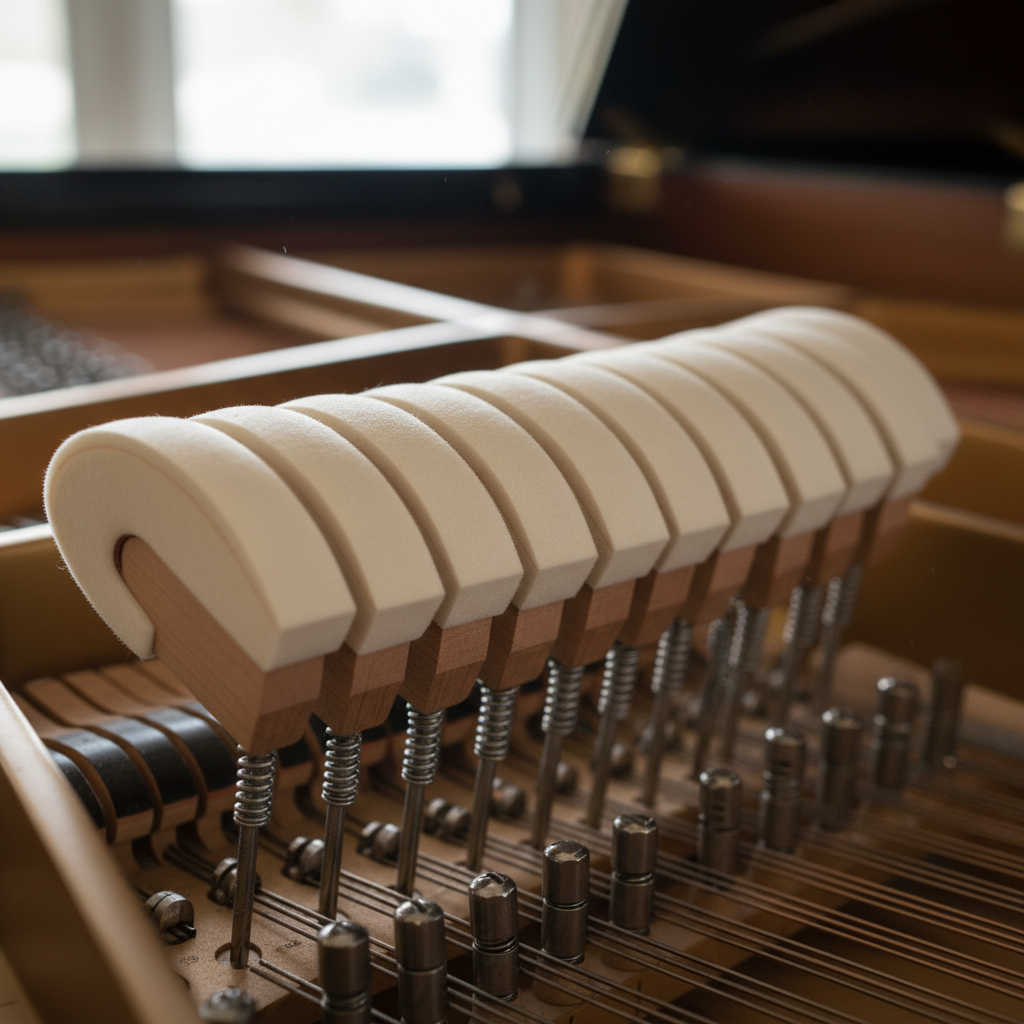
Regulation & Voicing
Hammer Travel and Touch Weight — The Feel Beneath the Sound
Regulation is the mechanical alignment of the action: key dip, let-off, hammer blow distance, damper lift. A well-regulated piano responds identically across all 88 keys at every dynamic. Voicing shapes the tone of each hammer by adjusting felt density — opening a bright, brittle sound or coaxing warmth from a hammer that has hardened with years of use.
Full regulation is typically recommended every 10–15 years for instruments in regular use. Voicing adjustments can be made as part of a standard service call when the change is minor.

String Replacement
When a String Breaks — or Should Have Broken Years Ago
Treble strings are plain steel wire wound to exacting gauges. Bass strings are copper-wound over a steel core. Matching replacement strings to the original scale design requires knowing the speaking length, the break angle over the bridge, and the original wire gauge — information often absent from the instrument itself. Thirty years of factory records and field notes fill that gap.
Single-string replacement is handled on the same visit when strings are in stock. Full bass string restringing requires a scheduled appointment and a minimum two-week lead time for custom winding.

Soundboard Repair
A Crack in the Soundboard Is Not a Death Sentence
Soundboard cracks are common in instruments kept in low-humidity environments. Most are cosmetic and have no effect on tone. A crack that has caused a buzzing resonance — a persistent sympathetic vibration at certain pitches — can be addressed with cleating and careful re-gluing. The assessment comes first: not every crack warrants repair, and overstating the problem serves no one.
Soundboard repair is evaluated in person. Photographs submitted in advance help determine whether a site visit is warranted before a formal estimate.
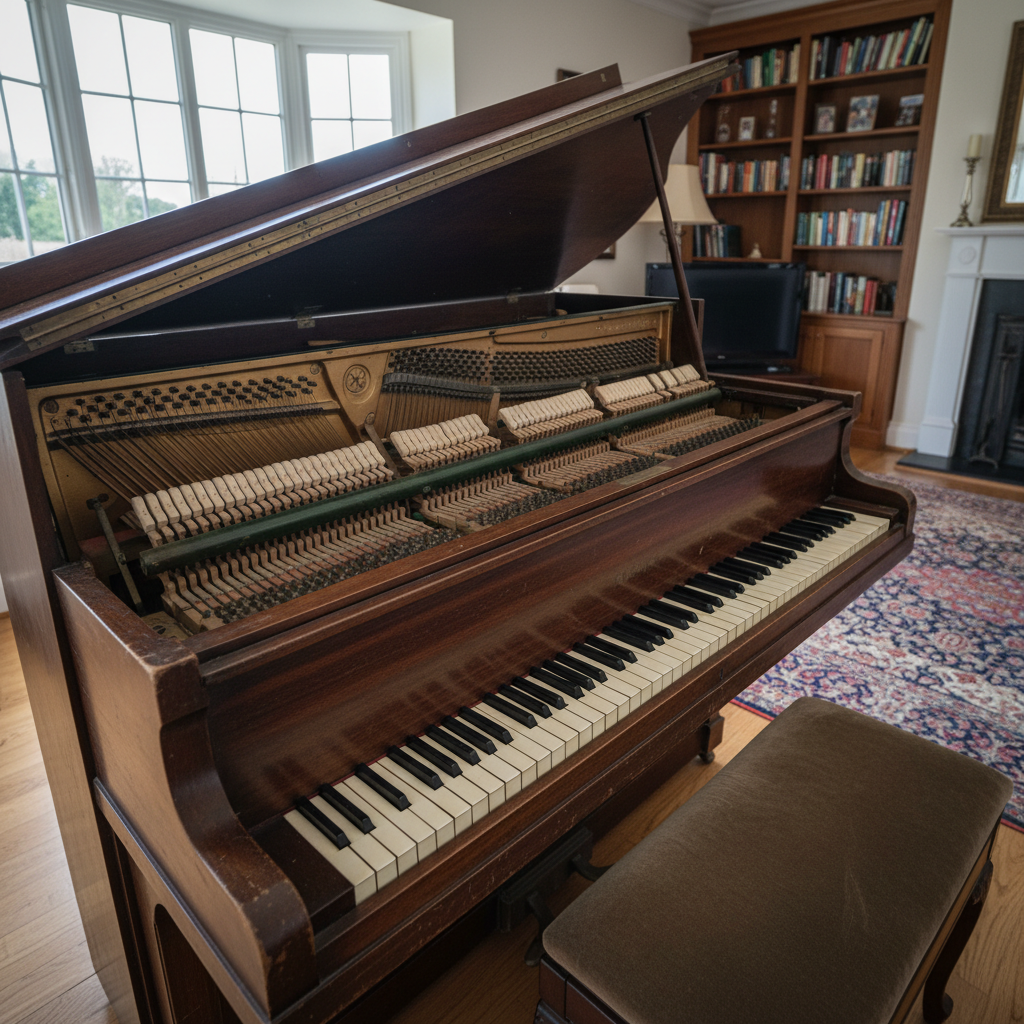
Humidity Control
The Single Largest Threat to a Piano's Stability
Wood expands and contracts with moisture. The soundboard swells in summer and flattens in winter, shifting pitch with it. A Dampp-Chaser system installed inside the case maintains a consistent relative humidity at the soundboard year-round, extending the interval between tunings and protecting glue joints, bridges, and pin block integrity.
Installation is recommended for any instrument in a climate without controlled humidity — including most churches, older homes, and storage situations. The system pays for itself within two or three tuning cycles.
30+
Years in Practice
Since 1994
2,400+
Instruments Serviced
Grands, uprights, spinets
98%
Return Client Rate
Across institutional accounts
3
Service Categories
Tuning, regulation, repair
Client Work
The instrument tells you what it needs.
The client tells you if you listened.
"Our Steinway Model B has been drifting flat every summer for a decade. After the pitch raise and regulation work, it held through an entire season — including the humidity spike in July. The choir noticed immediately."

Margaret Osei
Director of Music · St. Andrew's Episcopal Church, Concord NH


Book a Visit
Schedule a Tuning
Fill out the form and you'll receive a confirmation within one business day. For urgent repairs or institutional scheduling, call directly.
Phone
(617) 555-0183
hello@temperamentpiano.com
Service Area
Greater Boston · Southern NH
Travel fee applies beyond 40 miles
Select everything that applies. This helps determine what service your piano needs before the visit.